
Flexible hose & connector fixes, $100–$200
The brittle connector behind the cooktop, small part, common leak source, quick fix.
Gas is the one trade where "pretty confident" is not a standard. Leaks found and repaired, cooktops and heaters connected, lines run and certified: all of it by licensed gasfitters, all of it pressure-tested before the gas goes back on in Vaucluse.
In NSW, every job on a gas installation, connecting a cooktop, moving a bayonet, repairing a line: must legally be done by a licensed gasfitter, and for good reason: the failure modes are leaks, fires and carbon monoxide, none of which give second chances. It is also why "the handyman hooked it up" appliances are the single most common source of the leaks we get called to.
Licensed does not just mean allowed. It means the job finishes with a manometer pressure test proving the whole installation holds, appliances checked for correct operation and ventilation, and work done to AS/NZS 5601, the standard that decides what your insurer thinks of the installation if anything ever goes wrong. Across Vaucluse and the Eastern Suburbs, that is the finish line on every gas job we do.


Perched between the harbour and the open coast, homes here cop constant salt air that corrodes ageing pipework and fittings over time.
Salt attacks external gas pipework, regulators, meter connections and appliance fittings continuously. It is the reason a coastal property routinely fails a pressure test at a fitting rather than in a length of pipe.
Visible rust staining or white crusting at a joint is the early warning. It is cheap to address at that stage and considerably less so once the fitting is weeping gas.
Vaucluse’s steep streets tumble down toward the harbour, funnelling heavy rain fast into pits and lines that back up when blocked. We clear them and keep them flowing.
Homes near the water are often closed up tighter against wind and weather than their inland equivalents, and modern draught-proofing has made that more pronounced. Gas appliances need air, and a well-sealed room changes the ventilation calculation.
It matters most for older heaters and anything unflued. If a room with a gas appliance has been renovated to be more airtight, the appliance should be re-assessed for that room rather than assumed still suitable.
Outdoor gas appliances near the water live hard. Burners corrode, jets block with salt deposit, and hoses perish faster than the manufacturer's expected life.
Vaucluse is one of Sydney’s most exclusive harbourside suburbs (postcode 2030), running from the Sydney Harbour foreshore up to South Head and bordering Rose Bay, Watsons Bay and Dover Heights. Grand old homes, steep streets and a salt-air setting make drains their own challenge here, and we know them well.
It is not a reason to avoid an outdoor installation, but it is a reason to specify for the setting, stainless where it is exposed, a hose replacement interval, and a cover that is actually used.
Gas installations surface at transaction time. Buyers' inspections flag uncapped lines and old unflued heaters, insurers ask about compliance, and commercial leases usually require current certification.
A test before listing is cheap and removes a negotiating point. If you are buying an older property, having the gas installation tested before settlement is one of the better-value inspections available.
Correct combustion is blue and steady. Yellow, lazy or lifting flames mean the air-to-gas ratio is wrong, a blocked jet, a starved supply, insufficient ventilation, or an appliance set up for a different gas type.
It is the one diagnostic anyone can do without equipment, and it is worth a look at every gas appliance in the house once a year.
The installation is isolated, brought to a set pressure, and watched on a manometer for a defined period. If the needle holds, the system is tight. If it drops, gas is escaping somewhere and the test tells us roughly how much.
It is the only way to know the condition of pipework you cannot see, and it is the step people most often want to skip. It is also the step that finds the uncapped line behind the old stove.
Indicatively: a pressure test and leak location generally $220-$450; a new bayonet or appliance point $350-$800 depending on the run; an appliance service $180-$320; a cooktop changeover $250-$500 where the point already exists.
Those are market figures rather than our quote. Your number is agreed before work starts, and every job includes the compliance certificate rather than adding it.
The brittle connector behind the cooktop, small part, common leak source, quick fix.
Leaks at threads, valves and joints: found, sealed properly, retested under pressure.
Corroded or damaged runs cut out and replaced. Concealed lines needing access run $800–$2,500.
Cooktop, oven or heater connected, tested and certified. More if a new line or bayonet has to be run to reach it.
The going Sydney range for licensed gas work in 2026, with call-out fees typically $80–$150.
Every gas job ends with a pressure test and the paperwork that proves it. Figures here are indicative of the 2026 Sydney market rather than a quote from us, you get your own number as a fixed price before any work starts.
A suspected leak starts with isolation at the meter and ventilation, before diagnosis, before anything. No reading is worth taking on an installation still feeding a leak.
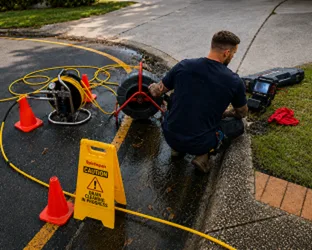
A manometer pressure test tells us the installation is losing gas; gas detection equipment and controlled testing narrow it to the joint, fitting or run responsible.
The failed component or section is replaced, not doped up and hoped over, to AS/NZS 5601, whether that is one connector or a rerun line.
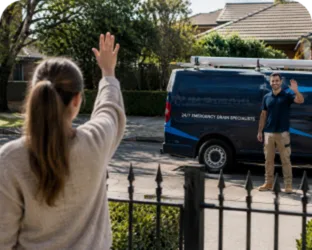
The whole installation holds pressure or the job is not finished. Appliances are relit and checked for correct burning, and you get the compliance side documented.
New cooktop in its box, a bayonet that needs moving, or a smell you are not sure about: call and it gets done properly.
Licensed gasfitters, every job pressure-tested and certified. Smell gas right now? 131 909 first, then us.

Leave your details and our local Vaucluse team will call you back fast.