
Common repairs: $150–$600
Elements, thermostats, thermocouples, relief valves: the parts that actually fail, fixed in a single visit. Most no-hot-water calls land here.
No hot water is a today problem, so we treat it like one. Gas, electric, continuous-flow and heat-pump systems repaired same-day across Vaucluse, and when a system is genuinely done, you get the honest replace-versus-repair numbers, not a sales pitch.
Most of the no-hot-water calls we take in Vaucluse end in a repair, not a skip bin. Electric systems lose elements and thermostats; gas systems lose thermocouples and pilot assemblies; continuous-flow units throw error codes that mean a sensor or a flow problem, not a dead unit. Those are parts, they are stocked on the van, and the fix is measured in hours.
The industry default is the opposite, quote a shiny new system to anyone whose water went cold, because a replacement is worth ten times a thermostat. We diagnose first. A five-year-old tank with a failed element deserves an element. What it does not deserve is a $2,000 replacement because someone could not be bothered testing a $40 part.
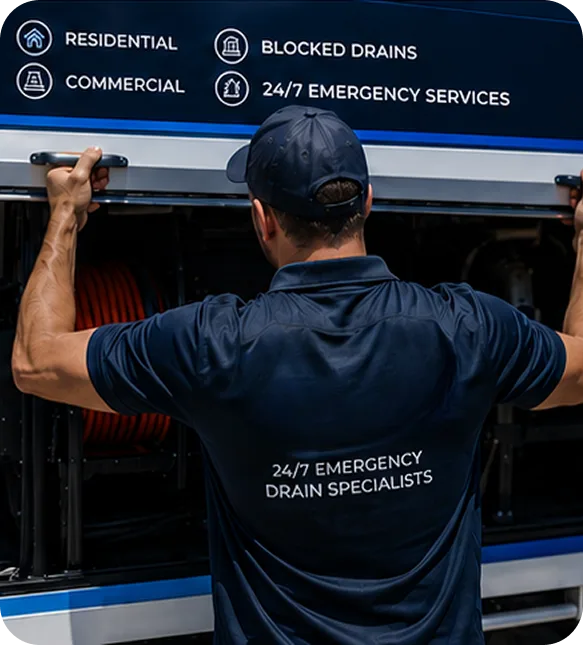

Perched between the harbour and the open coast, homes here cop constant salt air that corrodes ageing pipework and fittings over time.
Three things you can look at yourself without touching anything: rust staining or white crust at the fittings on top of the unit, whether the relief valve drain line is dripping continuously, and whether the casing has corroded through anywhere low down.
Any of those means the unit is nearer the end than its age suggests. Better to plan the replacement than to have it choose the date.
Vaucluse’s steep streets tumble down toward the harbour, funnelling heavy rain fast into pits and lines that back up when blocked. We clear them and keep them flowing.
Every storage unit has a relief valve drain line, and on a property with limited fall or a low-lying yard, that line frequently discharges somewhere it should not, against a wall, into a garden bed, or into a pit that backs up in heavy rain.
It matters because a relief line that cannot discharge freely is a safety device that cannot do its job. It is a quick thing to check and a cheap thing to correct.
Vaucluse is one of Sydney’s most exclusive harbourside suburbs (postcode 2030), running from the Sydney Harbour foreshore up to South Head and bordering Rose Bay, Watsons Bay and Dover Heights. Grand old homes, steep streets and a salt-air setting make drains their own challenge here, and we know them well.
A hot water unit mounted outside near the water lives a harder life than the same unit inland. Salt attacks the casing, the fittings and the relief valve, and a tank that might have run fifteen years elsewhere often does not here.
It is worth knowing before you buy the next one. Stainless or a properly protected enclosure costs more up front and is usually the cheaper decision over two replacements.
Indicatively: electric storage replaced like for like generally $1,300-$2,200; gas continuous flow $1,800-$3,000; heat pump $3,000-$5,000 before any rebate. Common repairs, element, thermostat, tempering or relief valve: usually sit between $250 and $600.
Those are market figures for 2026, not a quote from us. Your number is fixed before work starts, and rebates are worth asking about because they move.
Hot water systems give more notice than they get credit for. Rusty or discoloured hot water, a recovery time that has quietly doubled, a relief valve that has started weeping continuously, banging or rumbling from the tank, or damp around the base.
Any one of those is worth a look. Together they are a unit telling you to choose the replacement date yourself rather than have it chosen on a winter morning.
A tank that no longer lasts the morning is usually not broken. Sediment builds in the base and insulates the element, so less of the cylinder is genuinely being heated, and the element works harder for a smaller result.
Flushing the tank restores much of it. If flushing does not, the household has grown or the habits have changed, and the honest answer is that the tank is now undersized rather than faulty.
Elements, thermostats, thermocouples, relief valves: the parts that actually fail, fixed in a single visit. Most no-hot-water calls land here.
Gas valves, control boards on continuous-flow units, and bigger jobs on systems still worth the spend.
Like-for-like replacement when the tank is done. Gas storage runs $1,200–$2,200 installed.
Endless hot water, no tank to rust, and it frees the space the cylinder occupied.
After rebates. Costs the least to run of the lot, worth the numbers conversation on any replacement, not just the green one.
Repair or replace, you get both numbers side by side and the price is fixed before work starts. Figures here are indicative of the 2026 Sydney market rather than a quote from us, you get your own number as a fixed price before any work starts.

System type, age, and what it is doing: that is usually enough to bring the likely part on the van and tell you honestly whether today ends in hot water.
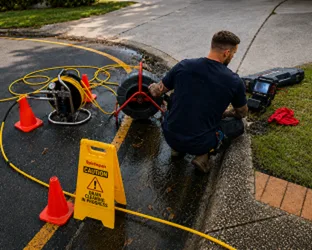
Elements get metered, thermostats tested, gas components checked in sequence. The diagnosis is what the meter says, not what sells best.
A repairable fault gets repaired on the spot. A dying tank gets you the repair price and the replacement price side by side, and the call stays yours.
If it is a replacement: delivered, installed to spec: tempering valve, relief drain, compliant connections: old unit carted away, hot water the same day in most cases.
Call before 10am and in most cases the water is hot again tonight. Describe the system and we bring the likely fix on the van.
Same-day repairs, straight replace-versus-repair numbers, and a fixed price before work starts.

Leave your details and our local Vaucluse team will call you back fast.