
Every quote for pipe relining leads with a rate per metre, and it is the number that tells you least. It is the reason two companies can quote the same rate on the same pipe and be four thousand dollars apart, and the reason people come away from three quotes no clearer than they were before.
Relining is priced as a fixed setup charge plus a rate for each metre of liner. On a long run the rate dominates and the maths behaves the way you expect. On a two metre patch the setup is most of the bill, and the effective cost per metre is two or three times the advertised rate. Nothing dishonest is happening. The truck, the crew, the jetter, the camera and the day are the same either way.
What follows is what the work actually costs in Sydney in 2026, what should be on the quote, what routinely is not, and how to tell whether the number in front of you is fair. If you have a quote in your hand and you are trying to work out whether to sign it, the section on reading three quotes is the one to read first.
What does pipe relining cost in Sydney in 2026?
Here are the working numbers. These are market ranges for domestic sewer and stormwater work in Sydney, not a quote from anybody, and the point of publishing them is so you can tell whether what you have been given sits inside them.
- CCTV survey: $300 to $750. Stands alone and is credited against the works by most operators. Nothing can be priced honestly without it.
- Relining: $500 to $900 per metre. The usual Sydney range for a 100mm domestic sewer. Larger diameters sit at the top of it or above.
- Setup or mobilisation: about $2,000 to $3,000. Charged once per job. Some companies show it as a line, some bury it in the rate, and knowing which changes how you read the quote.
- Junctions: $650 to $4,500 each. The widest range on the whole quote and the most common reason two prices differ.
- Patch repair: $1,500 to $4,000. One defect in an otherwise sound run.
- Full domestic run: $6,000 to $15,000. Where the camera shows the same failure repeating along the length.
- Excavation and replacement: from $2,500, plus reinstatement. The reinstatement is the part that moves, and it moves a long way.
Nationally the published rates run wider, from about $400 to $1,200 a metre, because they average Sydney and Melbourne against regional work where access is easier and labour is cheaper. If you are in the Eastern Suburbs the useful band is the Sydney one.
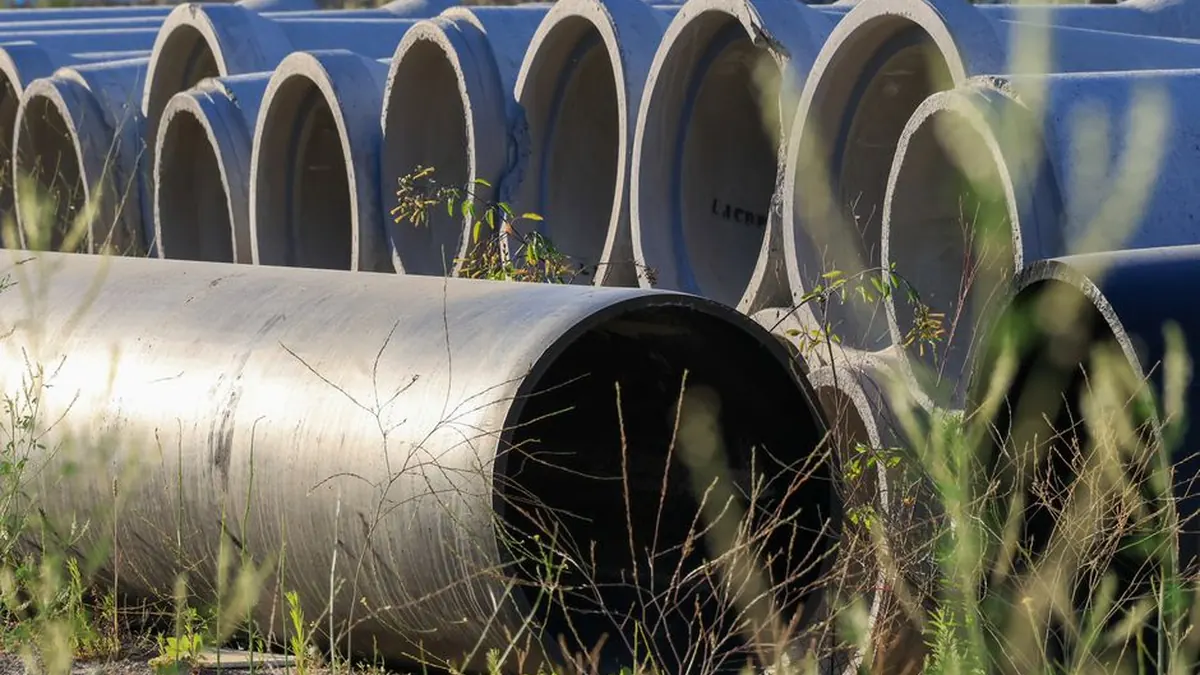
Three worked examples
The same rate, three different jobs. Take a setup charge of $2,500 and a liner rate of $700 a metre, both mid-range for Sydney, and watch what happens to the effective price.
- A 2 metre patch, no junctions. $2,500 setup plus $1,400 of liner is $3,900. Effective rate: $1,950 a metre, or nearly three times the advertised one.
- An 8 metre run with one junction. $2,500 setup, $5,600 of liner, $900 for the junction reinstated, is $9,000. Effective rate: $1,125 a metre.
- An 18 metre run with two junctions. $2,500 setup, $12,600 of liner, $1,800 of junctions, is $16,900. Effective rate: $939 a metre, which is finally close to the number on the quote.
The first example is the one that catches people. Someone is told $700 a metre, does the arithmetic on a two metre repair, expects $1,400 and gets a quote for close to $4,000. That is not a company padding a small job. It is what a fixed cost does to a short one, and it is worth understanding before you assume you are being taken for a ride.
Why is the per metre rate so misleading?
Because it is a variable cost quoted as though it were the whole price, and on most residential jobs it is not even the majority of it.
What the setup charge actually pays for
Before a single metre of liner goes in, a relining job needs a truck with a jetter on it, a camera rig, a robotic cutter, the resin and the curing gear, and a crew of two for most of a day. That happens on a two metre patch and on a twenty metre run alike. It also covers the parts of the job nobody sees: locating the access point, isolating the line, jetting the bore clean so the resin bonds to pipe rather than to sludge, and putting the camera down twice.
Some companies show that as a separate setup line. Others fold it into a higher per metre rate and quote no setup at all. The second approach looks simpler and is much harder to compare, because their $1,100 a metre and someone else's $700 a metre plus $2,500 might be the same price on your job and wildly different on your neighbour's.
How to strip it out of a quote
One question does it: what does this job cost at zero metres? Whatever that number is, that is the setup. Subtract it from the total, divide by the metreage, and you have the real rate. Do that to all three quotes and for the first time you are comparing like with like.
It is worth doing because the answer is often counterintuitive. The quote with the highest headline rate is frequently the cheapest on a short job, because it carries no separate setup. The one with the lowest rate is usually the cheapest on a long one.
What actually moves the price up or down
Seven things, in roughly the order they matter on a residential job.
1. Length of the run being lined
The single biggest variable, and the one you can pin down before anyone quotes. A camera survey marks distances from a known access point, so the quote should name a start and finish in metres rather than describing the job as "the line to the boundary". If two quotes disagree on the metreage, one of them has not measured, and that is a bigger problem than the price difference.
2. Pipe diameter
A 100mm line is the standard house sewer and the cheapest to line. A 150mm line, common on older properties and on anything shared between dwellings, costs more per metre because the liner is bigger, heavier and needs more resin. The jump is usually $100 or so a metre. Anything above 150mm is commercial territory and prices differently again.
3. Junctions
This is where quotes diverge most, and where the missing lines live. A junction is any point where another pipe joins the one being lined: the branch from a bathroom, the connection from a downpipe, an old gully. When a liner passes a junction it seals it shut, so the junction has to be reopened afterwards with a cutting robot and then, on a proper job, sealed at the joint with a top hat so the reinstated opening does not become the new weak point.
Published prices for that run from $650 to $4,500 each, which is an enormous spread, and the reason is that the cheap end is a cut and the expensive end is a cut plus a sealed junction liner. Two quotes on the same pipe, one with junctions at $650 and one at $2,200, are not two prices for one job. Ask which method is being used and what happens at the junction after the cut.
4. Access
Relining is installed through an opening that already exists, which is most of why it is cheaper than digging. If there is a suitable inspection opening near the run, the crew works from it. If there is not, one has to be made, and that is a small excavation with all of the cost that implies.
Then there is getting the truck near the work. A jetter and a curing rig are not carried by hand any useful distance. On a wide flat block with a driveway, none of this is a cost. On a narrow lot with a shared right of way, a set of stairs down to the house, or a street where nothing can park, it is a real one, and the honest quotes show it as a line rather than hiding it in the rate.
5. Condition, and the pre-work
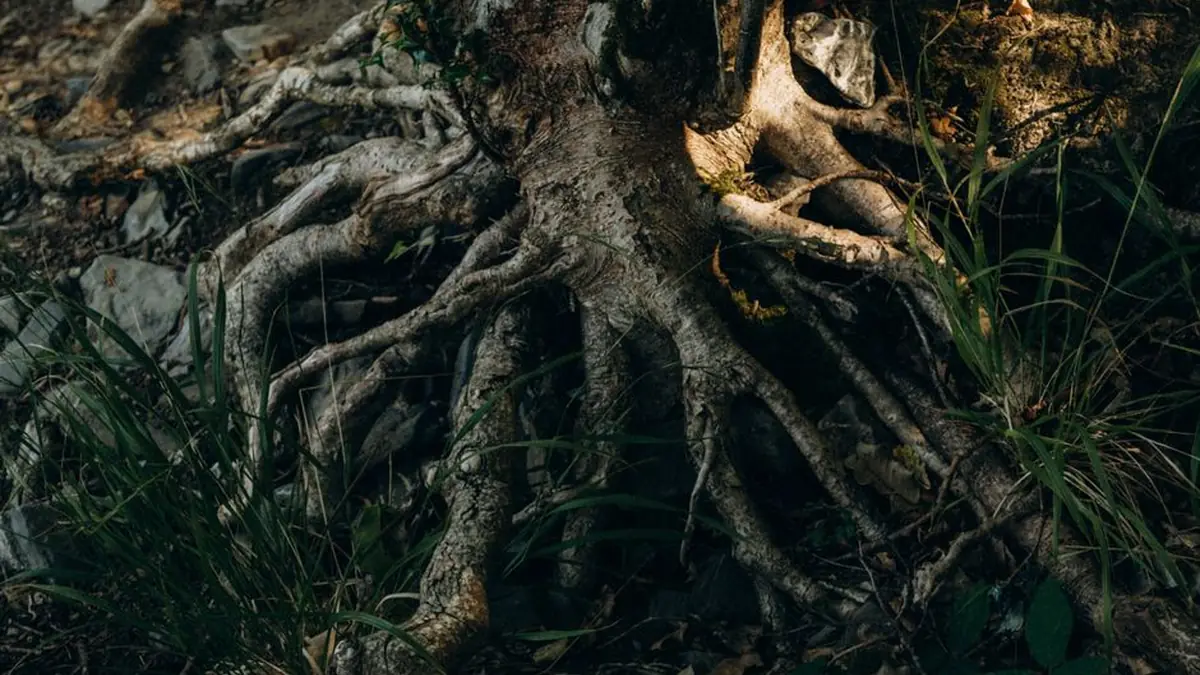
A liner bonds to the inside of the pipe, so the pipe has to be clean. On a line that has been slowly failing for a decade that means jetting out scale, silt and grease first, and cutting out roots where they have come through the joints. Neither is optional and both take time. On a badly rooted line the cutting alone can be half a day.
A quote that includes relining but not the pre-clean is not a cheaper quote, it is an incomplete one, and the difference will appear as a variation on the day. If your line is the one that gets cleared every year or two, expect the pre-work line to be a real number.
6. Curing method
Ambient cure sets on its own over several hours and costs least. Hot water or steam cure is faster and adds equipment. Ultraviolet cure is faster again, gives the most consistent result and costs most, and it is the one usually offered with the longest warranty. On a domestic sewer any of the three is legitimate. Where it matters to the price is that a UV quote should not be compared straight against an ambient one as though they were the same product.
7. Urgency and time of day
Relining itself is almost never an emergency, because a liner cannot go into a pipe that is full of sewage anyway. What is urgent is the blockage that revealed the problem, and clearing that is a separate job at a separate price. If a company is quoting an after-hours rate to install a liner tonight, ask why. The right sequence is nearly always: clear it now, camera it this week, reline it on a scheduled day.
Patch or full liner? The decision that sets the number
Most of the difference between a $3,000 job and a $12,000 one is not the company, it is which of these the pipe needs.
A patch is right when the camera shows one defect in a run that is otherwise sound. A single cracked section, one open joint, one point of root entry, with clean pipe either side. It is a length of liner cured over that defect only, typically half a metre to two metres, and on stable ground it is the proportionate answer.
A full liner is right when the same failure repeats along the length. On a clay line the barrel is usually fine and the joints have gone, and there is a joint every few hundred millimetres. Patching one of forty tired joints buys you a year. This is the case where the higher quote is genuinely the cheaper one, because the alternative is paying the setup charge over and over.
The camera decides this, not the quote, and it is the question to ask directly: how many separate defects did you see, and how far apart were they? Two defects three metres apart on a fifteen metre run is a different conversation from twelve defects spread along all of it.
Relining against digging: compare the whole job, not the repair
Excavation is often quoted as the cheaper option and on the pipe alone it frequently is. The comparison only makes sense when you add what sits on top of the pipe, because that has to come up and then go back.
What a dig actually costs
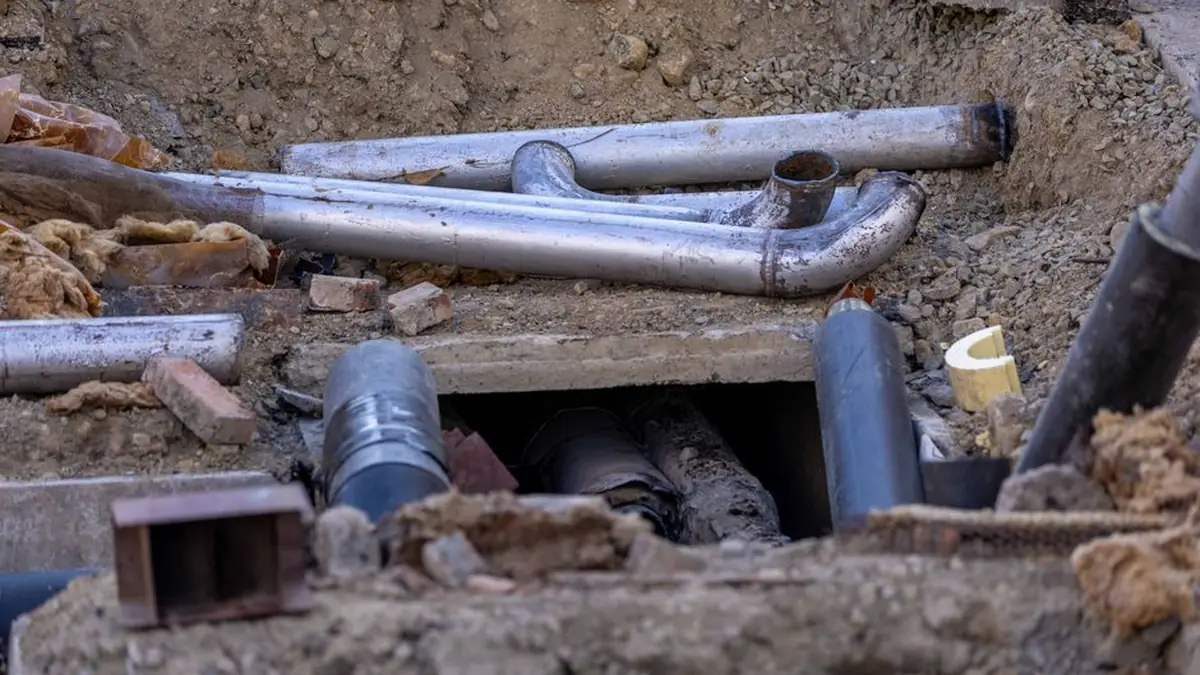
The excavation and re-lay of a short section starts around $2,500 and rises with depth and access. Then comes the second bill, and it is the one people do not price until they are looking at it.
- Concrete or paving: break out, remove, re-lay and match. Matching an existing paved area is frequently impossible, so the honest answer is often that a larger area gets redone than was dug up.
- Established garden: mature planting does not survive a trench through its root zone, and it is not replaced with equivalent plants at any sensible price.
- Driveways and vehicle crossings: reinstatement to a standard the council will accept, which is not the same as filling the hole.
- Retaining and terracing: on a sloping block, trenching near a retaining structure can mean engineering rather than gardening.
- Spoil and access: if a machine cannot get in, the dig is by hand, and the excavated material leaves the property in barrows.
A liner at $8,000 on a run under a paved courtyard is competing with a $6,000 dig plus $12,000 of reinstatement. That is the actual comparison, and it is why relining wins on most established properties and loses on an open lawn with a shallow pipe. If you are being quoted both, ask for the reinstatement to be itemised rather than described as "make good".
When relining is the wrong money
Two cases, and in both of them a liner is a poor spend no matter how good the price looks.
A run that has sagged or lost its fall. A liner follows the shape of the pipe it is cured inside. If the pipe holds water in a low point now, it will hold water in exactly the same low point afterwards, sealed and no better. The correct repair is excavation and re-lay of that section, and it costs more.
A collapsed section. There has to be a pipe for a liner to line. Where a length has crushed or fallen in, the answer is to dig that part out, whatever else happens to the rest of the run.
Both are visible on camera in about an hour, which is the whole argument for having the survey done before anybody quotes anything. If you want the detail on where a liner stops being the right repair, it is set out on our pipe relining page with the cases that do and do not suit one.
The camera survey, and what you should get for it
Charged separately at $300 to $750 and normally credited against the works. That is a fair arrangement, and a survey offered entirely free is either being recovered inside the price or is not going to be a thorough one.
What the survey should establish, and what you should be handed afterwards:
- The pipe material and diameter.
- Where each defect sits, in metres from a named access point, not "about halfway along".
- Whether the fall is intact, which decides whether a liner is appropriate at all.
- Where the junctions are and how many fall inside the proposed liner.
- The recording itself. Ask for the file. It is your property, it is the evidence behind the price, and an insurer, a strata manager or a buyer will want to see it later.
If a company will not show you the footage, the quote is a guess with a decimal point on it. That is worth being firm about, and it is the cheapest piece of leverage a homeowner has on this whole job. Where the line cannot be traced at all, or the water is going somewhere nobody can find, it is usually a locating job before a quoting job, and doing those in the wrong order is how people end up paying to dig in the wrong place.
How to read three relining quotes properly
Everyone says get three quotes. Nobody says how to compare them, which is the actual difficulty, because three quotes with different inclusions are not three prices for the same job. Here is the method.
The eight lines a complete quote carries
- 1. The CCTV survey, with its price and whether it is credited back.
- 2. The pre-clean, jetting the bore so the resin bonds to pipe.
- 3. Root or scale cutting, where the camera found any.
- 4. The liner, with the metreage and the diameter stated.
- 5. Each junction, with the number of them and what happens after the cut.
- 6. The final camera run, which is how you know the work is right.
- 7. Reinstatement of anything that had to be opened up to create access.
- 8. The warranty, in writing, with a term and what it covers.
Put the three quotes in a column each against those eight lines. A blank cell is not a saving. It is either work that is included and unstated, in which case ask for it in writing, or work that will appear later as a variation.
Five things that should make you slow down
- A price given without a camera survey. Nobody knows the metreage yet, and the metreage is most of the quote.
- A per metre rate with no total. Fine as a starting point, not something to sign.
- "Full run" with no metreage on it. Full run from where to where?
- Junctions not mentioned at all. Either there are none, which is unusual, or they are about to become a variation.
- A quote that arrives before the footage does. The evidence should precede the number.
Who actually pays: you, Sydney Water, or the neighbours
Worth settling before you accept any quote, because it occasionally moves the entire bill onto somebody else.
The boundary
For sewer, Sydney Water owns and maintains the main. The property owner owns the connection running from the house out to the point where it joins that main, which in practice means everything inside your boundary and sometimes a short distance past it. A defect in your yard is yours. A failure in the main itself is theirs, and they will attend it.
For stormwater, Sydney Water is not involved at all. They run the sewer and the water supply, not the rain. The pipe under the footpath and the drainage in the street belong to the local council, which in Vaucluse is Woollahra Municipal Council. So a kerb outlet crushed by a vehicle crossing is generally a council conversation, and everything behind it is yours.
Strata, duplexes and shared lines
On a duplex, a townhouse or a block of units, the drainage line running out to the main is very often common property, even where the defect is under one owner's courtyard. That makes it an owners corporation cost rather than a personal one, and getting three quotes and signing one on your own is a way to pay for everybody.
The order that works: get the camera survey, take the footage and the quotes to the strata manager, and let the repair be authorised properly. It is slower by a couple of weeks and it can be the difference between a $9,000 bill and a share of one.
Easements
Some properties drain through an inter-allotment easement, meaning your line runs across a neighbour's land before it reaches the street. Where that exists it is registered on title and the terms describe who maintains it. If the defect the camera found is past your fence, the title documents are the next thing to read, not the quotes.
Will insurance cover it?
Usually not, and the reason is specific enough to be worth knowing rather than guessing at.
Home building policies in Australia cover sudden and accidental damage. Almost all of them explicitly exclude damage that happens gradually, and they exclude damage caused by tree roots by name. A sewer line that has been slowly opened up by roots over fifteen years is the textbook case of both exclusions at once, which is why relining a rooted clay line is nearly always an owner cost.
Where a claim sometimes does work:
- Resulting damage rather than the pipe. The pipe repair is excluded but the water damage inside the house from the overflow may not be. Those are two separate parts of a policy.
- Sudden collapse from an identifiable event. A vehicle over an unprotected line, or ground movement after a storm, is arguable in a way that slow root intrusion is not.
- Some optional extras. A few insurers sell accidental damage or underground services cover as an add-on. Check whether you have it before you assume you do not.
In every one of those cases the camera footage is the evidence, and it needs to exist before the pipe is repaired. Reline first and photograph nothing and there is nothing left to assess. That alone is a good reason to insist on the recording.
What relining costs around Vaucluse, and why it sits where it does
Rates here run at the upper end of the Sydney band, and it is not the pipe that does it. Four local factors, all of them about everything except the drain.
Access is genuinely hard. The harbourside streets are narrow, a good number of houses sit below the road behind a flight of stairs, and plenty of properties are reached down a shared right of way with nowhere to stand a truck. Every one of those adds crew time before any work starts, and a job a jetter cannot be parked near is a more expensive job than the same pipe on a flat block in the west.
The ground is sandstone under shallow cover. That matters less for a liner, which does not care what is above it, and enormously for the alternative. Hand digging through sandstone is slow and machine digging near it is worse, so the excavation quote you are comparing against is higher here than the national figures suggest. Which, in the honest version of this, is part of why relining is the right answer around here more often than it would be elsewhere.
What sits on top of the pipe is expensive. Tiered gardens, sandstone paving, pools, retaining, mature planting that took twenty years to look like that. On a good number of local properties the reinstatement after a trench costs several times the drainage work, and that is the whole case for a liner rather than a dig. It is also why a quote that itemises reinstatement is worth more than one that says "make good".
The pipe is old and jointed. Much of the pre-war housing stock still runs on original clay and earthenware, laid in short lengths with a mortared joint every few hundred millimetres. Sixty or eighty years on, the barrel is often sound and the joints have gone, which is close to the ideal case for a liner and also the reason full runs are more common here than single patches. Add mature figs and paperbarks over the top of them, and the roots find every one of those joints.
How to bring the number down without cutting corners
Six things that genuinely reduce the bill, none of which is asking someone to leave work out.
- Do it before the third blockage, not after. Every clear costs money and none of it goes toward the repair. Two clears in a year is the signal to spend the money on a camera instead.
- Bundle the defects. The setup charge is paid once. If the camera found two problem areas, price doing both now against doing them separately.
- Book it on a normal weekday. There is no emergency version of relining, and paying an after-hours rate for it makes no sense.
- Use an existing access point. Ask whether the run can be lined from an opening that already exists. Sometimes moving the start point a metre avoids creating one.
- Get the survey credited. Standard practice, but only if you ask before it is done rather than after.
- Compare quotes on inclusions. The single biggest saving on this job is not paying twice for work that should have been in the first quote.
And one that is worth saying plainly: clearing is not repairing. Jetting a rooted line restores flow through a pipe that is still cracked, and it will be back. It is the right call when you need the toilet working tonight and the wrong call as an annual habit. If you find yourself booking blocked drain services in Vaucluse on a schedule, the clearing has stopped being maintenance and started being a subscription to a problem you already know the cause of.
When to stop reading and get someone out
Cost is a planning question, and most of this post assumes you have time to plan. Some of it is not.
- Sewage is backing up into the house, a shower base or a gully. That is a today problem and it is not a relining conversation yet.
- Water is coming up through the ground or a paved area, or ground has gone soft over a known line. Something is discharging where it should not be.
- A drain has been cleared twice in a year. The clearing is no longer the problem.
- You have a quote for a full excavation and nobody has put a camera down the pipe.
- The camera found a belly or a collapse and someone is still quoting you a liner.
The first two are the ones not to sit on. If sewage is coming back into the building, the sequence is to get it cleared and made safe first, then camera it on a dry day when a survey can see something, then price the repair. Trying to do all three in one visit at ten at night is how people pay the most for the least information.
The rest of it will wait for a scheduled appointment, and waiting is usually the cheaper choice. A camera survey booked for a Tuesday costs less than the same survey at midnight, shows more, and gives you something to take to three companies rather than a decision made under pressure by someone standing in their own hallway. Whichever way it goes, the useful order never changes: find out what the pipe is actually doing, then fix a blocked drain in Vaucluse once, properly, rather than paying to clear the same one every eighteen months for a decade.