
A drain that blocks once is an event. A drain that blocks again eighteen months later, at roughly the same time of year, is a pattern, and roots are the most common reason for it. This is about how they get in, why clearing keeps not working, and what actually ends the cycle.
How do tree roots get into a drain?
Through a defect that is already there. This is the part almost every article on the subject gets wrong, and it changes everything downstream of it.
Roots do not drill through sound pipe. They cannot. What they do is exploit an opening that already exists: a joint that has opened with ground movement, a crack in old earthenware, a poorly made junction, a section that has settled. Sydney Water puts it plainly, that roots enter small cracks in wastewater pipes to seek out nutrients, then continue to grow, taking up space and slowing drainage.
So the root in your drain is a symptom. The failing joint is the disease. Everything that follows in this article comes from that one distinction, and it is why the tree is usually the wrong thing to think about first.
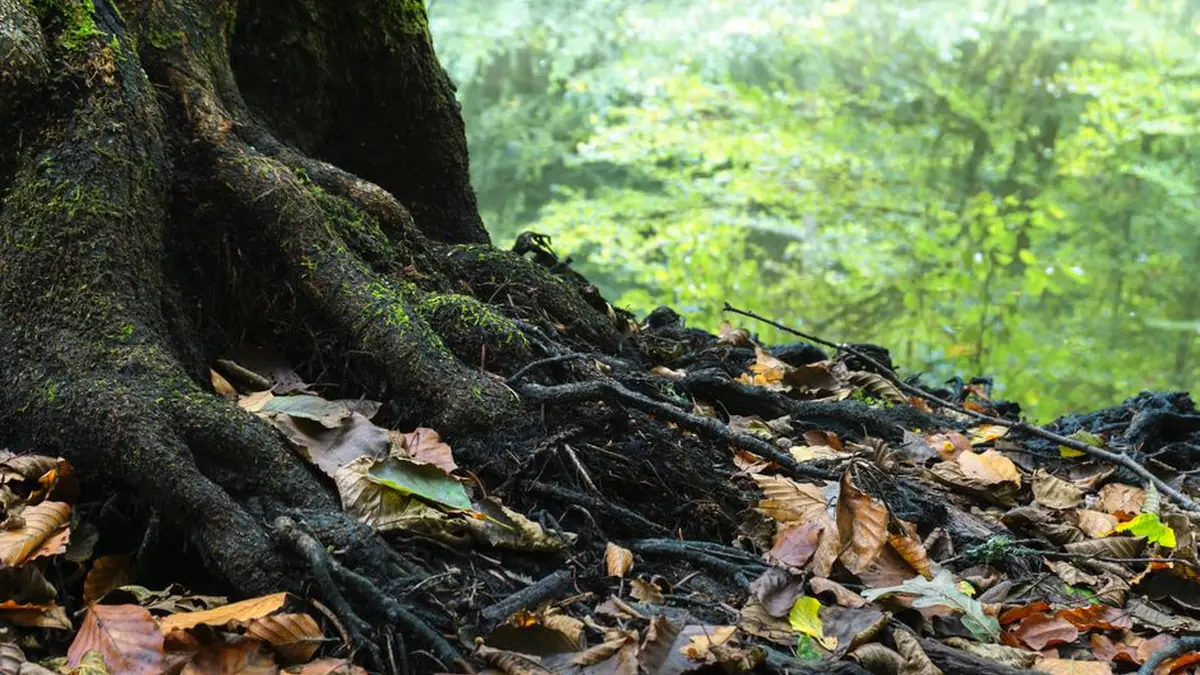
What the roots are actually looking for
Water and nutrients, in that order. A wastewater pipe carries both, at a steady temperature, all year round. When a joint leaks even slightly, the soil around it stays damp and enriched, and root growth concentrates there long before anything gets inside the pipe. By the time a root is in the line, the surrounding soil has usually been signalling for years.
This is why recurrence has a season. Roots forage hardest when the soil is dry, so a leaking joint becomes the most attractive thing in the garden exactly when there has been no rain. In Sydney that is not evenly spread across the year: at Observatory Hill, over 162 years of record from 1858 to 2020, September averages 68.1mm of rain against 133.1mm in June, in an annual mean of 1,211.1mm. The driest stretch of the Sydney year is also when a marginal drain is most likely to finally stop.
Why older pipes are the target
Age matters more than species. Drains laid before about 1960 are usually vitrified clay, sometimes called earthenware, in short lengths with mortared or unsealed joints. That gives a potential entry point roughly every 600mm along the entire run. Add several decades of ground movement and some of those joints are no longer tight.
Modern PVC is laid in long lengths with rubber ring or solvent welded joints, so there are far fewer openings and they stay sealed. Roots still get into PVC, but through damage rather than through design: a crack from poor bedding, ground movement, or a junction cut badly during a renovation.
What are the signs of tree roots in your drain?
The early signs are unremarkable, which is most of the problem. In rough order of appearance:
- Slow drainage in the lowest fixtures first, usually a shower or a ground floor toilet
- Gurgling from a floor waste or a basin when something else is emptied
- A smell outside near the gully rather than inside the house
- Water standing in the outside gully after normal use
- Blockages that clear easily and then return
- In the worst case, wastewater surfacing at the overflow relief gully outside
Any one of those has half a dozen possible causes. What separates roots from fat, wipes or a collapse is the pattern rather than the symptom.
The three signs that actually mean roots
First, it repeats on a cycle. One to three years is typical, and the interval shortens each time as the entry point widens. Fat and wipes build steadily and get worse with use, not with time.
Second, it is worse in dry months. That follows from the foraging behaviour above and it is the single most overlooked diagnostic on this problem.
Third, it clears easily and then comes back. A root mass cuts out quickly, which is why the plumber leaves and everything works beautifully. Nothing about the pipe has changed. If you want blocked drain help in Vaucluse that does more than restart the clock, the useful question to ask is not whether it can be cleared but what the camera saw afterwards.
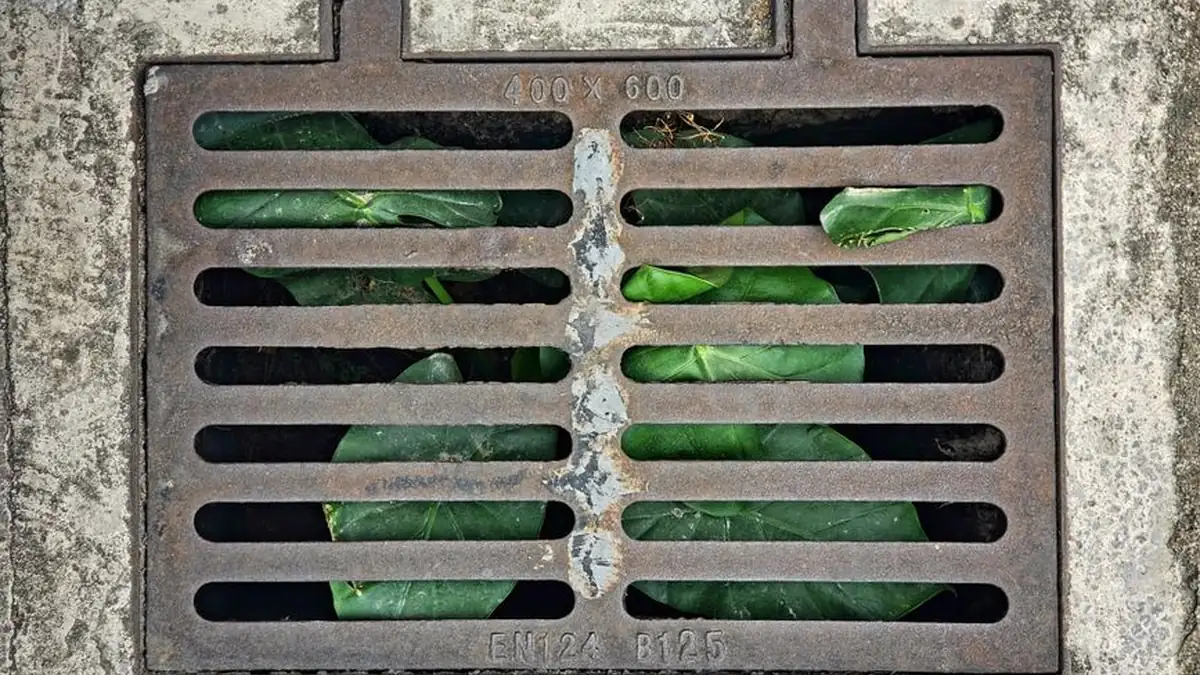
Why does it keep coming back after it has been cleared?
Because clearing removes the growth and leaves the entry. That is the whole answer, and it is worth being blunt about it because the alternative explanation people reach for is that the plumber did a poor job.
A cutting head on a jetter or an electric eel does exactly what it is meant to do: it shears the root mass off flush with the inside wall of the pipe and flushes the debris downstream. The drain runs properly again within minutes. But the crack or open joint the roots came through is untouched, the root system in the soil is entirely undamaged, and the conditions that attracted it there in the first place, damp enriched soil around a leaking joint, are now slightly better than before.
So it regrows. On most lines that takes one to three years, and each cycle tends to be shorter than the last because cutting widens the opening slightly and the root system nearby is more established.
Why cutting the tree down does not fix it
This is the most expensive wrong turn on the whole problem, and it is worth understanding exactly why it fails.
Removing the tree kills the roots. It does not remove them. The dead root mass sits in the pipe exactly where it was and still has to be cut out and flushed, so you have not avoided the clearing job. The opening it came through is still open. And the root system of every other tree, shrub and hedge within range is still looking for the same thing, so the vacancy usually gets filled. On a suburban block the next candidate is rarely far away.
Meanwhile you have removed a mature tree from an eastern Sydney garden, which is neither cheap nor quick to undo.
The pipe is what changed the outcome. Seal it, and the tree can stay.
And in Woollahra, you may not be allowed to anyway
Vaucluse sits in the Woollahra Municipal Council area, and the council requires written approval to prune or remove a tree on private land where it is over 5 metres tall or has a crown spread of more than 3 metres. Some species are exempt, and the exempt list sits in the council's Development Control Plan.
Damage to services is one of the things the council weighs. Its assessment criteria include the risk of damage to buildings, structures or services, alongside tree health, heritage significance and the effect on the streetscape. A council arborist inspects the tree. That is an assessment, not an automatic yes, and "the roots are in my drain" is an argument you have to evidence rather than a form you fill in.
Which makes the pipe the practical lever twice over: it is the thing that actually stops the problem, and it is the thing that does not need anyone's permission.
Which trees are the problem around here?
The honest answer is that distance and pipe condition matter more than species, but some trees are far more likely to be involved.
The pattern is large evergreens with wide, shallow, moisture seeking root systems. In eastern Sydney gardens that means figs and paperbarks most often, with willows and poplars wherever there is standing water. Palms are common here and are usually less of a problem, because their root mass is fibrous and stays closer to the trunk.
Sydney Water's guidance is to avoid planting trees within 6 metres of wastewater pipes. That is a useful planting rule and a poor diagnostic: a sealed pipe at 3 metres will often be fine, and a cracked earthenware joint will pull roots from considerably further than 6 metres away. The tree finds the fault. It does not create it.

Why Vaucluse gets more of this than most suburbs
Three things stack up here, and they are specific rather than general.
The housing stock is old and detached. At the 2021 Census, Vaucluse had 9,510 residents in 3,792 private dwellings, and 48.7% of those dwellings are separate houses. That is roughly half the suburb sitting on its own block with its own drainage line running out to the street, much of it laid well before PVC was in general use.
The gardens are mature and large. A high income suburb with established landscaping is a suburb full of forty to eighty year old trees with root systems to match, and the trees were often planted long after the drains were laid.

And the ground moves. Hawkesbury sandstone with shallow sandy soil over it, on blocks that fall steeply toward the harbour, is not a stable bed for a rigid jointed pipe over eighty years. Joints open. Once they open, they leak. Once they leak, they advertise.
How is it actually fixed?
There are only three real options, and a camera decides between them. Anyone quoting a fix before they have looked inside the pipe is guessing.
Step one: clear it and look
Clearing comes first because you cannot see through a blocked pipe. A jetter with a root cutting head is the usual tool: it cuts the mass out and flushes it, rather than boring a hole through the middle of it the way an unweighted eel sometimes does.
The part that matters is what happens next. A camera run in the same visit turns "your drain was blocked" into a defect, a distance from the house, and a condition assessment. Without it you have bought time and learned nothing, which is precisely how a line ends up cleared four times.
Step two: line it, if the shape is sound
If the pipe still holds its round shape and its fall, and the problem is open joints and cracks, a liner is usually the answer. A resin liner cured inside the existing pipe seals every joint on that run at once, so it does not just close the entry the roots used, it closes the ones they would have used next.
It also avoids the second bill. On a Vaucluse block the trench is rarely the expensive part; the paving, the garden, the retaining wall and the driveway on top of it are. Relining is done through existing access points.
Step three: replace it, if the shape has gone
A liner takes the shape it is cured inside. If a section has sagged and lost its fall, lining it preserves the sag, and a pipe that does not drain properly will silt and block whether or not roots can get in. If a section has collapsed there is nothing left to line against.
In both cases that length has to come out and be replaced. It is more disruptive and it is sometimes the only honest answer, which is why the camera comes before the quote. If the footage shows standing water sitting in a low section rather than draining away, that is what you are looking at, and no drain unblocking in Vaucluse will change it.
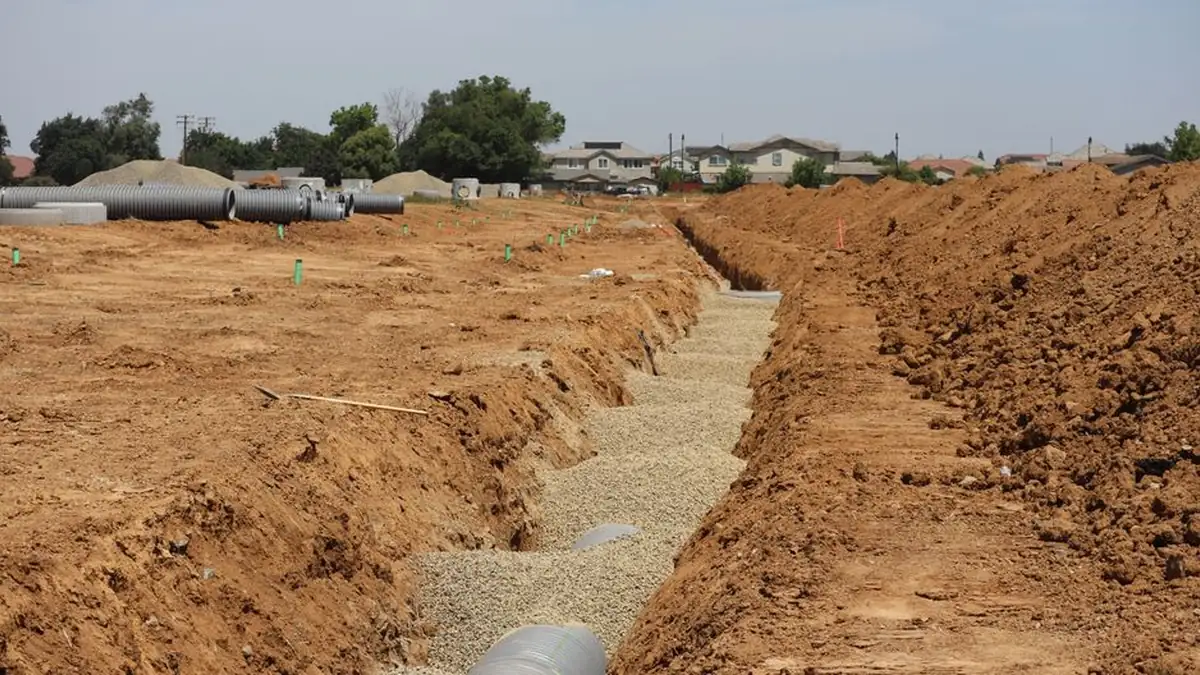
Do chemical root killers work?
They do something. They do not do the thing they are bought for, and the difference matters.
Foaming root treatments kill root tissue on contact inside the pipe, which can slow regrowth for a season. Three things they do not do: they do not remove the mass already in there, which still has to be cut out; they do not repair the crack or joint the roots came through; and they do not reach the root system in the soil, which is where the tree actually lives. So the best case is a delay you have to keep paying for, on a pipe that is still failing.
There is a second reason we do not use them. What goes into a drain ends up in the wastewater system, or, if someone picks the wrong drain outside, in the stormwater line that runs to the harbour. Neither is a good place for a root herbicide, and on a stormwater line it is an offence in New South Wales rather than a poor choice.
Who pays for it?
This is the question with the most money attached and the least coverage anywhere else on the subject. There are three possible answers and they turn on where the defect is.
Your pipe, up to the point of connection
On a standard Sydney property you own and maintain the private wastewater pipe from the house out to the point of connection with Sydney Water's system. Sydney Water owns the sidelines and the junction itself, and publishes that the property owner is responsible for clearing tree roots that enter the junction at the point of connection.
One exception is worth knowing because it is real money: where the connection is deeper than 2.5 metres, Sydney Water will take over the repair. It will not reimburse excavation costs down to 2.5 metres, so the depth is the trigger rather than a rebate.
The collapsed services program, and the trap in it
If a private sewer pipe has actually collapsed under a public road or a hard footpath, Sydney Water runs a program that can repair it at no cost. The conditions are specific. The collapse has to be on public land outside your boundary, under a roadway or hard footpath rather than a grass verge or dirt path, and evidenced with clear CCTV footage or photos from a licensed plumber. Sydney Water defines a collapse as a pipe that is more than 25% collapsed; below that it is your plumber's job.
Here is the part nobody publishes, and it is the single most useful thing on this page if your drain is near the street. If you cannot provide the evidence yourself you can ask Sydney Water to send an independent specialist plumber. If they confirm a collapse, Sydney Water covers the cost. If they find something else, and the guidance names tree roots and wipes specifically as examples of something else, that plumber bills you directly at $500 plus GST for the first half hour and $150 plus GST for each half hour after that.
So a root blockage under the footpath is not covered, and finding that out the expensive way is entirely avoidable. Get your own camera footage first and you will know which conversation you are having before anyone is called.
If it is next door's tree
This is where people expect a straightforward answer and there is not one, but there is a defined process. In New South Wales the Trees (Disputes Between Neighbours) Act 2006 lets a landowner apply to the Land and Environment Court about a tree on adjoining land. Under section 9 the court can order that damage be remedied, that further damage be prevented, that compensation be paid, and in some cases that the tree be removed or replaced. Blocked pipes and broken paths are given as examples of the kind of damage it deals with.
Two practical points. It needs evidence rather than argument: the court expects expert material from an arborist, builder or engineer on the cause of the damage and its extent and cost, which in this case means camera footage and usually a root identification. And the Act is for neighbouring private land, with exceptions including trees on council managed land, so a street tree is a different conversation with the council rather than a court application.
In practice most of these are settled by fixing the pipe, because that is faster and cheaper than establishing liability, and because a sealed pipe is not damaged by anyone's tree. It is still worth knowing the process exists.
How do you stop it happening again?
Prevention on this problem is mostly about the pipe rather than the garden, which is the opposite of what most advice suggests.
- Seal the line. Relining or replacing the defective section is the only measure that actually ends it, because it removes the entry rather than the intruder.
- Do not plant close to the line. Sydney Water advises against trees within 6 metres of wastewater pipes, and knowing where your line runs before you plant is free.
- Consider a root barrier for new planting. A physical barrier set between a new tree and a known pipe run redirects growth downward. It is far less useful retrofitted around an established tree.
- Treat the second blockage as information. The first is bad luck. The second on the same line is a defect telling you where it is.
- Get the camera footage and keep it. It dates the defect, which matters for insurance, for a strata claim and for any conversation about a neighbour's tree.
What will not work, despite being widely recommended: pouring things down the drain, removing the tree and hoping, and clearing on a schedule. The last one at least keeps the drain running, but it is a subscription rather than a solution, and on a line that is deteriorating the interval gets shorter every year.
If a drain is backing up into the house right now rather than draining slowly, that is a different problem with a different urgency, and our emergency plumber page covers what to do first. If you are seeing damp or a persistent wet patch in the garden with no obvious blockage, a leaking joint may be losing water before it ever blocks, which is what leak detection is for.