
Almost everything written about unblocking a sink treats the blockage as debris: something went down, it got stuck, get it out. That works fine for a bathroom basin, where the blockage is a plug of hair and toothpaste sitting in the first hundred millimetres and you can very nearly see it.
A kitchen sink is not that, and the difference is the whole job. A kitchen sink is the only drain in the house that blocks with something that went down as a liquid. Nothing got stuck. Fat left the sink at the temperature of washing-up water and turned solid somewhere further along, where the pipe is cold, and that is usually two or three metres away from the plughole everybody is staring at.
Once you know that, most of the standard advice sorts itself into what works and what does not, and the two things that top every list, the kettle and the bicarb, land firmly in the second pile.
Where the blockage actually is
Worth getting straight before you touch anything, because it decides which end of the pipe you spend your afternoon at.
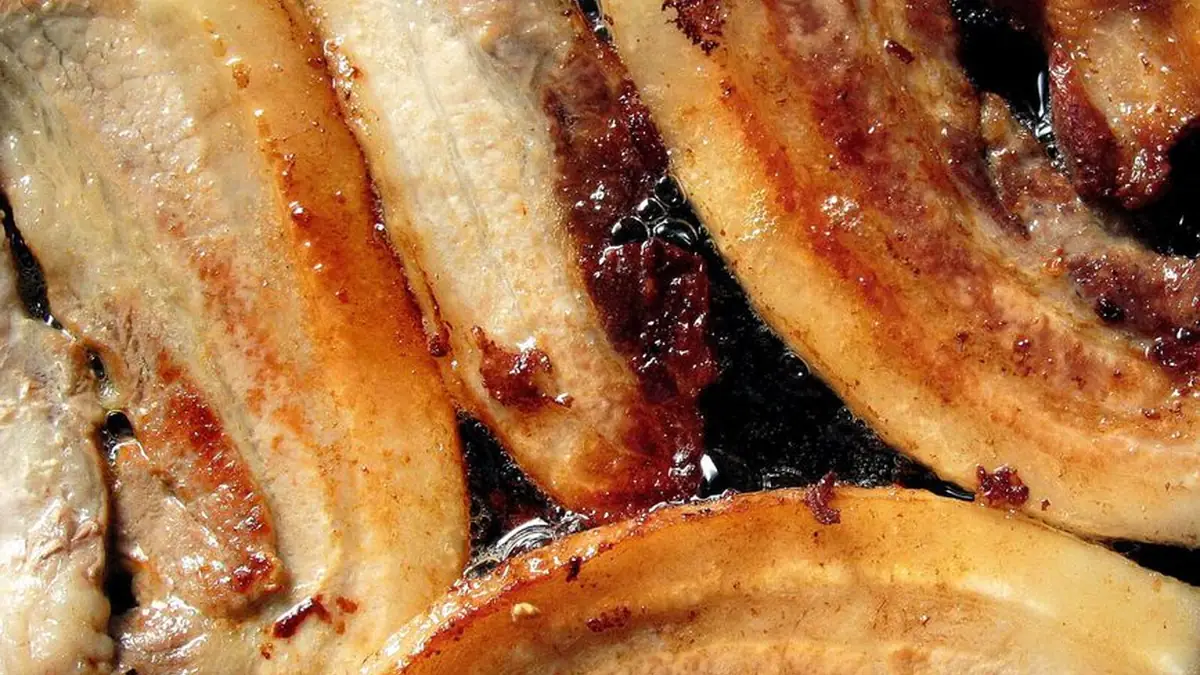
Fat goes down warm and sets where the pipe is cold
Washing-up water leaves a sink somewhere between 45 and 60 degrees. Cooking fat, butter, dripping, the oil off a roasting tray, all of it is comfortably liquid at that temperature and it flows out of the bowl looking like water. It only becomes a problem when it cools, and it cools at the speed the pipe takes the heat out of it.
The pipe under a kitchen is not warm. A waste running through a wall cavity, under a timber floor or in the fill under a slab sits close to ground temperature all year, which around Sydney is high teens. So the fat cools quickly, it thickens, and the first place it starts sticking is wherever the water slows down: the horizontal run past the trap, the first bend, the junction where the sink and dishwasher wastes meet. That is metres from the plughole.
It builds from the outside in, as a lining rather than a plug. The pipe narrows a bit each month, which is why kitchen sinks almost always go slow before they go blocked, and why the day it finally stops is never the day anything unusual happened.
Why that makes a kitchen sink harder than it looks
Three consequences follow, and all three explain something people find confusing.
- Plunging often does nothing. A plunger works by shifting a slug of water back and forth against an obstruction. That is very effective against a hair plug 150mm down a basin waste. Against a two-metre length of pipe that has narrowed to the width of a pencil, it moves water in a tube and changes nothing.
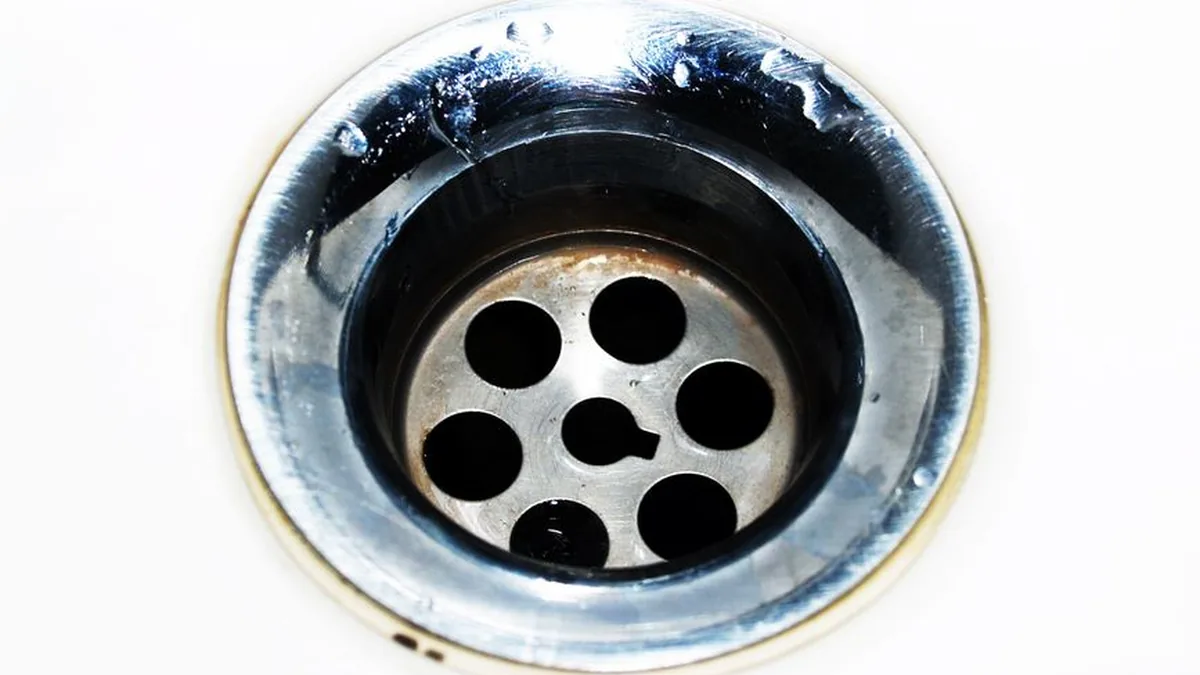
- Looking down the plughole tells you nothing. The strainer can be spotless and the pipe two metres on can be nearly shut. Almost every photo attached to an article about this shows a plughole, which is the one part of the system that is usually fine.
- "It drained fine afterwards" is not the same as fixed. Anything that opens a channel through the middle of a fat lining restores flow immediately. The lining is untouched. That is why the same sink is slow again within weeks.
Is it the sink, or is it the line?
Same question as with any blocked fixture, and it decides whether this is an hour with a bucket or a job for a machine. Three checks, five minutes, and the first one is specific to sinks.
Check one: does the other bowl fill up?
If you have a double sink, this is the fastest diagnostic in the house and almost nobody uses it. Run the tap into one bowl and watch the other one.
- Water rises in the second bowl. The blockage is past the tee where the two bowls join, which is typically within 300 millimetres of each other under the bench. Nothing at the plughole reaches it, and any plunging has to have that second bowl sealed or the pressure simply escapes through it.
- The second bowl stays dry. The blockage is in the first bowl's own short leg, or in its trap. This is the good version: it is the bit you can take apart.
On a single-bowl sink the equivalent check is the overflow, if there is one. Water appearing at the overflow slot means the bowl is genuinely full to that level and the restriction is below the trap.
Check two: what else in the house is slow?
Run the bathroom basin, the shower and the laundry tub, then flush the toilet. This separates a fixture problem from a drain problem, and it takes two minutes.
If the kitchen sink is the only slow thing, the blockage is in the kitchen waste, and everything in this article applies. If the shower and the laundry are slow as well, or the toilet gurgles when you empty the sink, the restriction is in the shared line they all run into and the kitchen sink is just the fixture that showed it first. At that point the tools change: a line needs an eel or a jetter from an inspection opening outside, and it is worth having blocked drain specialists in Vaucluse look at it rather than working on the sink.
A toilet that has gone slow at the same time is the strongest single signal on that list, because a toilet is the last fixture in the house to notice a restriction. If yours has, read the blocked toilet side of it as well, because the two symptoms have one cause.
Check three: does the dishwasher back up into the sink?
This is the early warning nobody writes about, and if you have a dishwasher it will usually tell you before the sink does.
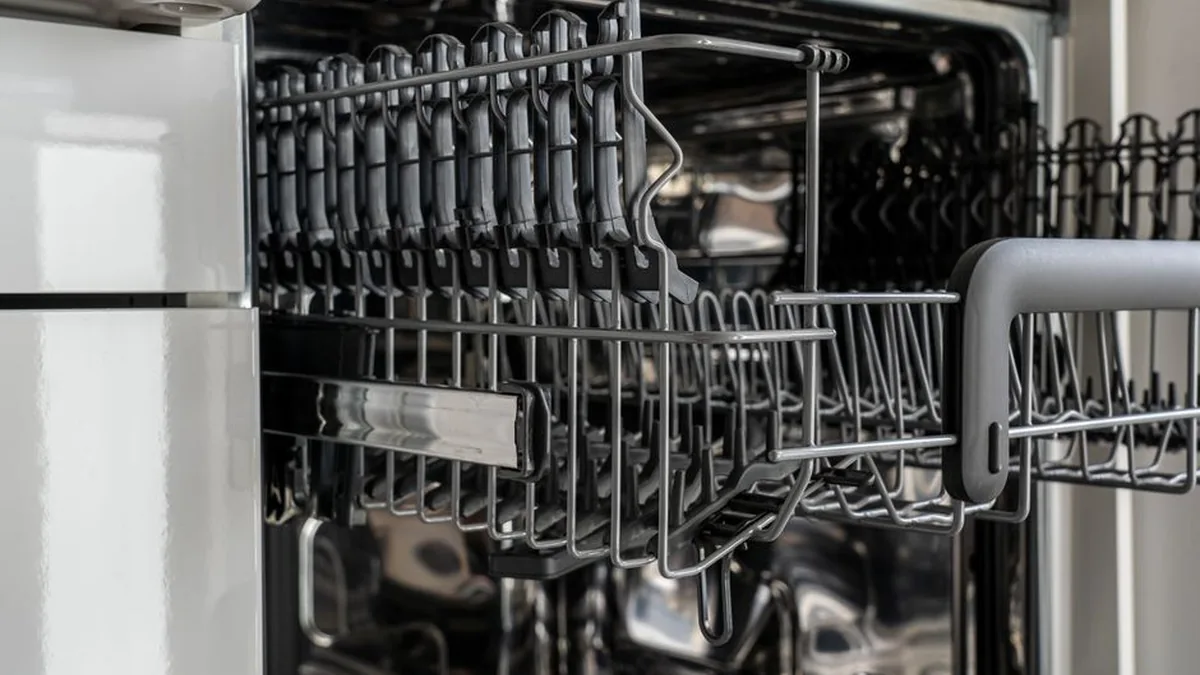
A dishwasher does not drain by gravity. It pumps its water out under pressure, through a hose that connects into the same waste as the sink, almost always above the trap. So when that waste starts to narrow, the pump wins for a while, and the water it forces down comes back up the path of least resistance, which is the sink bowl. Grey water and food bits appearing in a clean sink at the end of a cycle is not a dishwasher fault. It is the kitchen waste telling you it is half shut.
What actually blocks a kitchen sink
Four things, in the order they matter. The first one is most of the tonnage.
Fat and oil, which is most of it
Every liquid fat in a kitchen ends up here: the pan you rinsed, the tray you soaked, the oil off a salad bowl, the residue on every plate. None of it feels like pouring grease down the sink and collectively it is exactly that. A household producing a tablespoon of fat a day is putting a couple of litres a year into a 40mm pipe.
It does not stay pure fat, either. Alkaline detergent, and dishwasher powder in particular, reacts with fatty acids to form a solid soap. That is the same reaction that made soap for a few thousand years, and the result is the grey, waxy, slightly crumbly material we pull out of kitchen wastes, which is a good deal harder than the fat that went in. It is a different mechanism to the calcium stearate that furs up a bathroom waste, and it produces a good deal more of it.
Food scraps, and the three worst offenders
Food on its own rarely blocks a pipe. Food caught in fat that is already lining the pipe is what turns a slow sink into a stopped one, and three things are much worse than the rest.
- Coffee grounds. They do not dissolve, they do not float, and they are fine enough to pack into a dense sludge that sets like wet sand. They are the single most common thing we pull out of a kitchen trap after fat.
- Rice and pasta. Both keep absorbing water after they are cooked. A tablespoon of rice rinsed off a plate is several times that volume by the time it reaches a bend.
- Fibrous vegetable waste. Celery strings, onion skins, corn husk, potato peel. The strands catch on anything rough and then everything else catches on them.

The strainer that is doing nothing
Most kitchen wastes have a basket strainer with holes six or seven millimetres across. That stops a fork and a fish bone and nothing else. Coffee grounds, rice, fat and detergent all go through it as though it is not there, which for practical purposes it is not.
A fine mesh basket that sits in the waste, the three-dollar item next to the scourers, stops perhaps ten times as much. It is the highest-return thing on this entire page and it is also the only one that requires nothing of you but emptying it.
The condition of the pipe itself
Last, and the one that does not respond to anything in a cupboard. In an older house the kitchen waste may be original: galvanised steel, copper, or in the oldest of them lead going into earthenware. All three have a rougher internal surface than PVC, and rough is exactly what a fat lining needs to get a grip on.
The tell is a sink that has been getting slower for years rather than months, and that is slow again within weeks of being cleared. Nothing is blocking it in the sense of an object in the way. The bore is simply smaller than it was designed to be, and it will keep being smaller until the pipe is dealt with rather than cleared.
What blocks a bathroom basin instead
Worth a short section, because half the people searching for a blocked sink drain mean the basin, and it is a genuinely different problem with a genuinely different fix.
A basin blocks with hair, toothpaste, shaving foam and soap, bound together into a plug. Crucially that plug sits in the first hundred to two hundred millimetres, usually caught around the pop-up waste mechanism itself, and it is often visible if you shine a torch down. There is no fat, so there is nothing setting further down the pipe.
That makes a basin the easier of the two by some distance. Take the plug out, or lift the pop-up if it lifts, pull out what is wrapped around the stem with gloves on, and the large majority are done. A basin that is still slow after that responds well to a plunge, because this time there really is a discrete obstruction for the water to work against. Everything above about fat, temperature and distance simply does not apply.
How to unblock a kitchen sink
Five methods, in this order. The order is not arbitrary: each one either fixes it or narrows down where the blockage is for the next one.
1. Get the standing water out
Every guide skips this and every method below needs it. A bowl full to the brim gives water nowhere to go, so a plunge just slops it over the edge, detergent floats on top of it and never gets near the blockage, and you cannot see whether anything is changing.
Bail it out with a jug or an old container into a bucket, down to an inch or two in the bottom. If the water is greasy, and it usually is, it goes down the toilet rather than back into the sink or the garden.
2. Dishwashing liquid, then hot tap water
The detergent matters more than the water, which is the opposite of how everyone runs this method. Dishwashing liquid is a surfactant: it wedges itself between fat and water so the fat breaks into droplets rather than staying a mass. That is the actual mechanism, and it keeps working when it is diluted, which is why it is the one thing worth pouring in.
Squirt a generous amount straight into the waste, not into the water, and leave it a good fifteen minutes so it has time to work down the pipe to where the blockage is. Then half a bucket of hot tap water, poured steadily from as high as you can manage without splashing. The height gives you a bit of force; the heat only softens.
3. One proper plunge, with the leaks blocked
A plunge on a kitchen sink fails far more often than it should, and it is usually not the blockage's fault. There are three places the pressure escapes, and every ranking page on this SERP tells you to plunge without mentioning any of them.
- The second bowl. On a double sink, the pressure goes straight out of the other waste. Hold a wet cloth balled firmly into it, or have somebody stand there with the plug in and their hand on it.
- The overflow. Many kitchen sinks have one, usually a slot near the top of the bowl. Push a wet cloth into it.
- The dishwasher hose. If the dishwasher outlet ties into the waste above the trap, that is a third open path. You cannot easily block it, which is a real reason a plunge on a dishwasher-connected sink underperforms, and a real reason to move to the trap instead of trying harder.
With those closed, make sure there is enough water in the bowl to cover the cup completely: a plunger has to move water, and air compresses. Push down slowly the first time to expel the air under the cup, then push and pull firmly for about twenty seconds.
One honest attempt. If nothing has changed, stop. Repeated plunging against a fat blockage compacts it and gains nothing, and the next step is better anyway.
4. Clean out the trap under the sink
This is the step that finds most of them, and it is the one advantage a sink has over every other fixture in the house. Open the cupboard and there it is: a U-bend or a bottle trap in white or black plastic, held on by two large collars that are designed to be undone by hand.
Put a bucket underneath, and a towel under the bucket. Loosen the collar nearest the sink first, then the one on the wall side, both by hand. There will be more water in there than you expect and it will not be pleasant. Tip the trap out, take it to the bathroom, and clear it out properly, warm water and an old bottle brush. What comes out is the answer to what has been happening: grey waxy fat means the fat theory is right, coffee sludge means the grounds are, and clean plastic means the blockage is past the trap and you are done with what you can do here.
Refit hand tight, in the same order, making sure the tapered washers go back the way they came out and face the way they did. Then run the tap for a full minute with your hand under both joints. Hand tight is correct: these joints seal on a washer, not on force.
5. A hand auger past the trap
If the trap came out clean, the blockage is in the wall pipe beyond it, and a small hand auger, the kind sold as a drain snake for about twenty-five dollars, is the last home tool that reaches it.
With the trap still off, feed the cable into the pipe going into the wall, turning the handle whenever you feel resistance rather than pushing harder. It reaches a metre or two, which covers the first horizontal run and often the first bend. On a fat blockage you will feel it go soft rather than hit something solid, and you draw the cable back slowly to bring what is on it out.
If you are leaning on it, stop. Force at that point is going into a joint, or into a rough section of old pipe, not into the blockage, and the difference between a blocked drain and a broken one is a bad ten seconds.
Five things that make it worse
All five turn a contained problem into a bigger one, and we see all five regularly.
- Caustic or acid drain cleaner. It rarely reaches a fat lining metres down the pipe, it sits in the standing water instead, and it is still sitting there when someone opens the trap. On older metal wastes it attacks the pipe more reliably than the blockage. If any has gone down, say so when you call, so we turn up with the right protection rather than finding out.
- Boiling water on a fatty drain. Covered above, and it is worth repeating because it is the most-recommended fix on this topic. Melting a blockage and moving it further along is not clearing it.
- Plunging for twenty minutes. Compacts fat, and on an old chrome or brass trap the repeated pressure is enough to weep at a seized joint.
- Running the dishwasher to "flush it through". It pumps out under pressure into a waste that cannot take it, which is how a slow sink becomes water in the cupboard under it.
- Tipping fat down while the tap runs hot. The single most common cause of the next blockage, and the one everybody believes is fine. The hot water only carries it further before it sets, which puts it in a worse place. Fat goes in the bin.
Where a kitchen sink actually discharges
Useful to know because it explains where a plumber will look, and because on an older house there is a place you can check yourself.
On a lot of Sydney houses built before the seventies, the kitchen and laundry wastes do not connect straight into the sewer line under the floor. They run out through the wall and discharge over a grated gully outside, usually at ground level against an external wall, with a trap below it. That gully is the connection point, and because it is the last thing before the sewer line it is also the thing that silts up with exactly what a kitchen sends it.
Two things are worth doing with that. First, look at it: if it is full of water when nothing is running, or full of leaves and mud, that alone can be the restriction and it is the one part of the system a homeowner can reasonably clear. Second, watch it while somebody runs the kitchen tap. Water arriving there normally means everything between the sink and the gully is clear, and the problem is further out. Water not arriving means it is somewhere in between, and now you know which few metres of pipe to care about.
Why kitchen sinks around Vaucluse block the way they do
Two things about the housing stock here shift the odds, and neither is about anyone's habits.
The first is that a lot of these kitchens are not where the original kitchen was. Renovating an older home almost always means moving the sink, and the practical way to do that without lifting a floor is to run a longer waste at a shallower fall to reach the existing connection. Every extra metre of near-flat 40mm pipe is another metre of slow water for fat to settle in. A 1930s house on its third kitchen can easily have a run several times the length the original had, and it will block several times as often for no other reason.
The second is what that pipe runs into. On the older streets around here the sink waste still discharges into original earthenware laid in short sections with mortared joints. Those joints are rough on the inside, and after fifty or sixty years some of them have shifted a little, which gives fat a lip to build against and gives roots a seam to find. Once that has happened, clearing it is a temporary measure by definition, and relining the affected length is what stops the cycle without digging up a courtyard.
That is also why the honest answer to "why does this keep happening" is often not about the kitchen at all. If a sink has needed clearing twice in a year, the useful spend is a camera down the line, not a third round of drain cleaning in Vaucluse.
What happens when we turn up
Worth knowing so you can tell whether what is being proposed to you makes sense.
The trap comes off first, always, because it is thirty seconds and it settles half the jobs. If the trap is clear, a small electric drain machine goes into the wall pipe: a 6 to 8 millimetre cable with a cutting head that scrapes the fat off the pipe wall rather than punching through it. On a kitchen line that is usually the whole job and it takes under an hour.
Where it is a long run, a shared line, or a sink that has blocked before, a high-pressure water jetter is the better tool. It scours the full bore at around 4,000 PSI, which on a fat-lined pipe is a completely different result from a cable: cable clears a channel, water clears the pipe. That is the difference between a sink that stays clear for years and one that is slow again by spring.
And on a second blockage, a camera. Not as an upsell, but because at that point the question has changed from "what is in the pipe" to "why does this pipe keep filling up", and those have different answers and different fixes.
When it has stopped being a job for the cupboard
Most blocked kitchen sinks can wait for a normal appointment, and we will say so on the phone rather than sell you an after-hours rate for something that is not going anywhere. Stop and call if any of these apply:
- The trap came out clean and the sink is still not draining. Everything past the trap needs a machine.
- Water is appearing in the cupboard, at a joint or under the dishwasher. A leak under a kitchen bench gets into chipboard and the damage outruns the plumbing bill quickly.
- More than one fixture is slow, or the toilet gurgles when the sink drains. That is the shared line, not the sink.
- Water is backing up out of the gully outside while the kitchen is being used.
- The waste under the sink is metal and something has started weeping. Old chrome and brass go from marked to holed without much warning.
The one worth treating as urgent is water coming back up out of a floor waste or the gully while fixtures are still being used, because that is sewage finding the lowest opening rather than a kitchen problem, and it is worth an after-hours callout rather than waiting it out.
Keeping the next one further away
Four habits. The first two are worth more than everything else on this page put together, and neither costs anything.
- Fat goes in the bin, cold. Wipe the pan out with paper towel before it goes in the sink. Pour cooled oil into the container it came in, or a jar, and bin it. This is the whole prevention strategy and everything else is a detail.
- A fine mesh strainer basket in the waste. Three dollars, catches an astonishing amount, and it is the only physical barrier between your pipe and your scrapings. Empty it into the bin, not down the sink, which is a habit that takes about a week to form.
- Coffee grounds and rice into the bin or the compost. Both are worse than they look and neither belongs in a 40mm pipe.
- Once a week, a sink of hot tap water released all at once. Fill the bowl, then pull the plug: the volume and the slug of water do far more than a trickle from the tap, and it is the only maintenance habit with any mechanical basis. Enzyme dosing is a reasonable addition on a line that already has history. Neither will clear an existing blockage.
None of this is a lecture about carelessness, because most blocked kitchen sinks are not caused by it. They are caused by a small pipe doing a job it was never really designed for, in a house where the kitchen has probably moved at least once. The distinction that actually saves you money is still the one at the top: it is not at the plughole, it is metres down, and knowing that is what tells you whether to reach for a bucket or a phone.