
A blocked toilet is the one plumbing problem nobody can put off until the weekend. A slow sink is an annoyance; a toilet that will not go down stops the house. And it is the fixture where the instinct to fix it, flush again and see if it clears, is exactly the thing that turns a contained problem into water on the floor.
It is also the fixture people most often misdiagnose. The keyword people search is blocked toilet drain, and that word is doing more work than they realise: about half the toilets we are called to are not blocked at all. The pan is fine. The drain it empties into is not. Those are two different jobs with two different tools, and telling them apart takes about five minutes.
First: stop it overflowing
This is the only time-critical thing on this page, so it goes first. If the bowl is filling rather than emptying, you have somewhere between a few seconds and a minute before the decision gets made for you.
Do not flush again. A full flush on a modern Australian dual-flush pan sends 4.5 litres into a bowl that already will not take what is in it. That is the single most common way a blocked toilet becomes a flooded bathroom, and the reflex to do it is almost irresistible. Resist it.
Where the stop tap is
Every toilet installed in Australia has an isolation valve: a small tap on the water line, almost always on the wall directly behind or just below the cistern, sometimes at floor level to one side. It is usually chrome, about the size of a fifty-cent piece, with either a flat screwdriver slot or a small lever.
Turn it clockwise until it stops. That is a quarter turn on a lever type and a couple of full turns on a screw type. The cistern can no longer refill, so nobody can flush it a second time while you are working on it, including the person who does not know it is blocked yet.
Get the level down before you start
If the water is sitting close to the rim, take it down to about half full with a jug or an old container before you do anything else. Everything below, plunging especially, displaces water, and a bowl that is already brim-full has nowhere to put it.
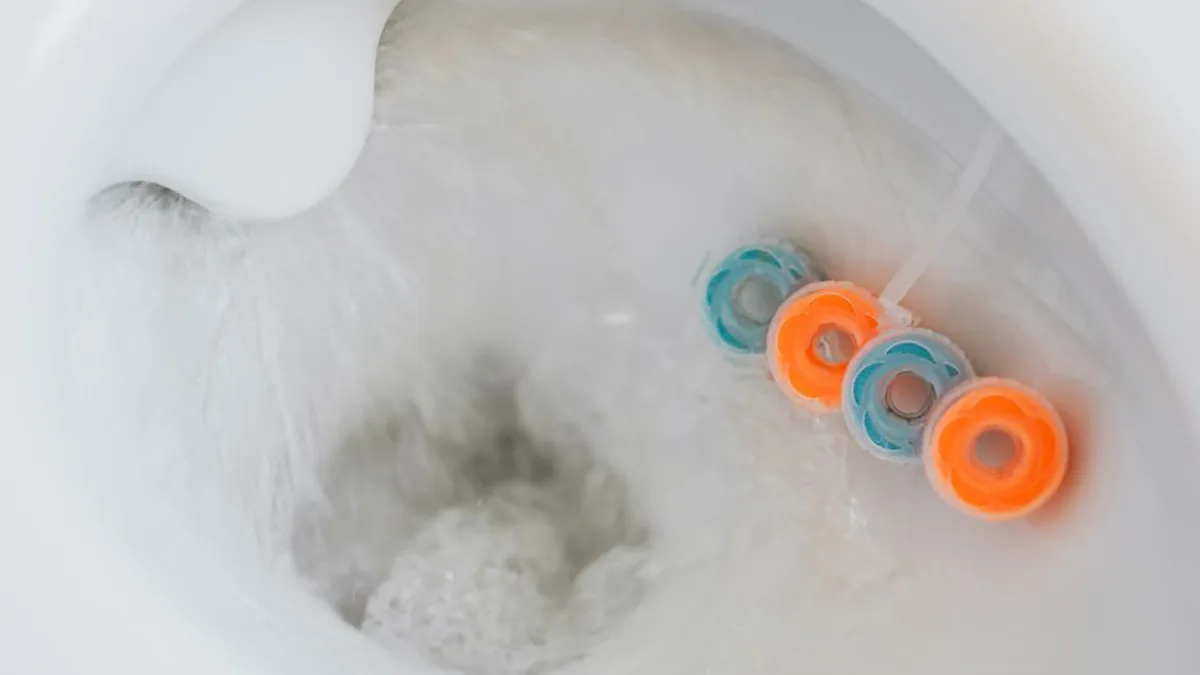
Is it the toilet, or is it the drain?
This is the question the rest of the job hangs on, and almost nothing written about blocked toilets asks it. A blockage in the pan is a twenty-minute job you can do yourself. A blockage in the line is a machine, and often a camera. The three checks below take five minutes and they are the same three we run through on the phone.
Check one: does the bowl empty on its own?
Leave it alone for twenty minutes and come back. If the water level has dropped noticeably, it is a partial blockage, water is getting past it. That is good news twice over: partial blockages are usually paper, paper breaks down, and a plunger has something to work against.
If the level is sitting exactly where it was, nothing is getting through at all. That points either to something solid wedged in the pan outlet, or to a line that is completely blocked further down.
Check two: what else in the house is slow?
Run the bathroom basin, the shower, the kitchen sink and the laundry tub. This is the check that actually separates the two jobs, because the toilet does not have its own private drain: it is the biggest thing feeding the same line.
- Only the toilet is affected. The blockage is in the pan, or in the short run of pipe immediately after it. This is the one worth doing yourself.
- The shower or the floor waste is slow as well. They are downstream of the same line and the blockage is past both. Nothing you do at the bowl will reach it.
- Everything is slow, or water appears at the lowest drain in the house when you use something else. That is the main sewer line, and it needs to be looked at rather than plunged.
That last one is worth sitting with, because it is counter-intuitive. If flushing the toilet makes water come up in the shower, the toilet is not the problem: it is just the biggest tap pointing at a blocked pipe. Clearing the pan would achieve nothing. This is the point at which a blocked drain plumber in Vaucluse is a better call than another trip to the hardware store.
Check three: does anything gurgle?
Flush the toilet, if it is safe to do so, and listen at the shower waste and the basin. A gurgle is air being pulled back through a water seal because it cannot move through the pipe. Two fixtures talking to each other like that means the line they share is restricted.
The reverse test works too, and it is safer on a toilet that is close to full: fill the basin, pull the plug, and watch the water level in the toilet bowl. If it moves, rises, drops or ripples, the two are connected through a partly blocked line rather than a clear one.
What actually blocks a toilet
Two categories, and they map exactly onto the two jobs. Knowing which category you are in tells you whether to reach for a plunger or a phone.
Things that block the pan
- Too much paper at once. The most common cause by a distance, and the most likely to clear on its own. Paper blockages are also the reason "just wait" is genuinely reasonable advice on a toilet and terrible advice on a kitchen sink.
- Wipes, and anything labelled flushable. They leave the bowl and then stop at the first rough joint. Unlike paper they do not break down: they bind together into a rope.
- Sanitary products and nappies. They are designed to absorb and swell. A tampon that clears the pan can double in size in the line.
- Objects. Toys, phones, cleaning bottles, air freshener cages. If a small child has recently been unsupervised in the bathroom, start here. An object will not respond to a plunger and pushing it further is the worst outcome available.
- A weak flush. Not a blockage at all, but it causes them. If the cistern is not filling to its line, every flush is running at half power and paper that would normally clear the S-bend stops in it.
Things that block the line
- Tree roots at a pipe joint. The dominant cause of recurring blockages on older properties, and it has nothing to do with what anyone flushed.
- A sagging or backfalling section. Water sits in the low point instead of running through it, solids settle there, and it becomes the place everything catches from then on.
- Scale and build-up in an old line. Decades of narrowing until the pipe no longer has the capacity for a 4.5 litre flush.
- A collapsed or cracked pipe. Usually announced by blockages that come back faster each time, and by the drain getting worse after heavy rain.
- Wipes, again, further down. The ones that got past the pan.
The pattern is simple enough to be useful: pan blockages are caused by what went in this week, line blockages are caused by the condition of the pipe. If the same toilet has blocked more than once in a year and nobody has changed what they flush, it is not a toilet problem. That is when we put a camera down it rather than clearing it again, and it is the whole difference between fixing it and clearing the same blocked toilet four times.

Four things worth trying
In this order, and only if check two said the toilet is the only fixture affected. If anything else in the house is slow, none of these will help.
1. Hot water and dishwashing liquid
Squirt a generous amount of dishwashing liquid into the bowl and leave it ten minutes so it works its way down to the blockage. Then pour in about half a bucket of hot tap water from roughly waist height.
Two things are doing the work and only one of them is the heat. The detergent lubricates the pan outlet and helps a paper mass slide; the drop from waist height adds a shove of water that a gentle pour does not. It is free, it is the least likely thing on this page to make anything worse, and on a paper blockage it works often enough to try first.
2. One proper go with a flange plunger
The plunger matters here, which is why every guide on this SERP mentions it and almost none of them explain it. A flat cup plunger, the red rubber dome for sinks, cannot seal against the curved outlet at the bottom of a toilet bowl. It will slap around and move nothing. A flange plunger has a soft rubber sleeve that folds out of the cup and seats into that outlet, and it is what makes the difference between moving water and making noise.
Fold the flange out, seat it into the outlet, and make sure the bowl has enough water to cover the cup completely: a plunger moves water, not air. Push down slowly the first time, because the first push is only expelling the air trapped under the cup and a fast one sprays the contents of the bowl back at you. Then push and pull firmly for about twenty seconds.
Have one honest go. If it has not moved, stop, repeated plunging on a blockage that is not shifting packs it tighter into the S-bend rather than breaking it up, and that is a real pattern on jobs where somebody has been at it for an hour before calling.
3. A closet auger, gently
A closet auger, sometimes sold as a toilet auger, is a short coiled spring in a rigid tube with a handle, and it costs about thirty to fifty dollars. It is not the same thing as the hand auger you would use on a basin, and the difference is the plastic or rubber sleeve on the end of the tube, which sits against the china so the steel coil never touches it. Without that sleeve you scratch the glaze, and a scratched glaze is where the next blockage starts.
Feed it down the outlet slowly, turning the handle when you feel resistance, and let the coil find its way around the S-bend. It reaches roughly a metre, which covers the pan and a little past it. When you feel it grab, draw it back rather than pushing harder, on paper it will pull the mass back into the bowl, which is unpleasant and completely conclusive.
If you are leaning on it, stop. Force at that point is going into a joint or an old pipe, not into the blockage.
4. A wet-and-dry vacuum, if something solid went in
This is the one method on the list that is specific to objects, and it is the right answer whenever a plunger is the wrong one. If a toy, a phone or a cleaning bottle has gone down, do not plunge and do not auger: both push it further into a pipe that gets no wider.
A wet-and-dry vacuum on the wet setting, with the filter out and the hose pushed into the outlet, will lift small objects straight back out. It works because you are pulling instead of pushing, and pulling is the only direction that can undo the mistake. If it does not come, leave it there and say what it is when you call: a plumber who knows there is a Matchbox car in the pan takes the pan off; one who does not runs an eel through it and turns a retrievable object into a fragment in the sewer line.
Does baking soda and vinegar unblock a toilet?
No, and on a toilet it fails for a reason that is different from, and more decisive than, the usual objection. It is still one of the two things the AI answers and half the ranking pages recommend.
The usual objection is that bicarb and vinegar neutralise each other and the fizz is carbon dioxide venting into open pipe where it cannot build any pressure. True, and it applies everywhere. But on a toilet there is a simpler problem in front of that one: the reagents never reach the blockage at all. A toilet pan holds two to three litres of standing water in the S-bend by design: that water seal is what stops sewer gas coming into the bathroom. Half a cup of bicarb tipped into three litres of water is a weak slurry before it has gone anywhere, and the vinegar you pour after it meets the same three litres. Whatever reaction happens, happens in the bowl.
The same arithmetic sinks every other bowl remedy on the internet: Epsom salts, bath bombs, Coke, dishwasher tablets. They all assume the bowl is empty and it never is. The one bowl treatment that does work, dishwashing liquid, works precisely because it is not trying to react with anything. It coats and lubricates, and it stays effective diluted.
Four things that make it worse
Each of these turns a straightforward clear into a bigger bill, and we see all four regularly.
- Flushing again to see if it has cleared. The most expensive four seconds in plumbing. If the level has not dropped on its own, the flush has nowhere to go but the floor.
- Caustic or acid toilet cleaners. Poured into a pan they are diluted immediately by the water seal, so they rarely reach the blockage, and then they sit there. Whoever opens that pan next, you or us, is reaching into it. Tell us if any has gone down, so we turn up prepared.
- A coat hanger or a screwdriver. Straightened wire against vitreous china chips the glaze at the outlet, and the chip is invisible from above. Every future blockage now starts at that spot.
- Hiring a power auger. A machine-driven coil in a pipe you cannot see into, run by someone who cannot feel the difference between a blockage and a joint, is how a blocked drain becomes an excavation. On the older earthenware still under a lot of homes around here, it is not a close call.
What the gully outside is telling you
Go outside and look for the gully: a grated drain at ground level, usually against an outside wall near the bathroom or the laundry, sometimes with a small dish-shaped surround. Almost every Australian house has one and almost nobody knows what it is for.
It is an overflow relief gully, and it is a deliberate safety device. It is required to sit lower than the lowest fixture inside the house, so that when the sewer line blocks, the pressure finds that grate first and the sewage comes up in the garden instead of through your shower. If it is running, it is not broken. It is doing precisely what it was installed to do, and it is telling you something specific: the blockage is downstream of the whole house.
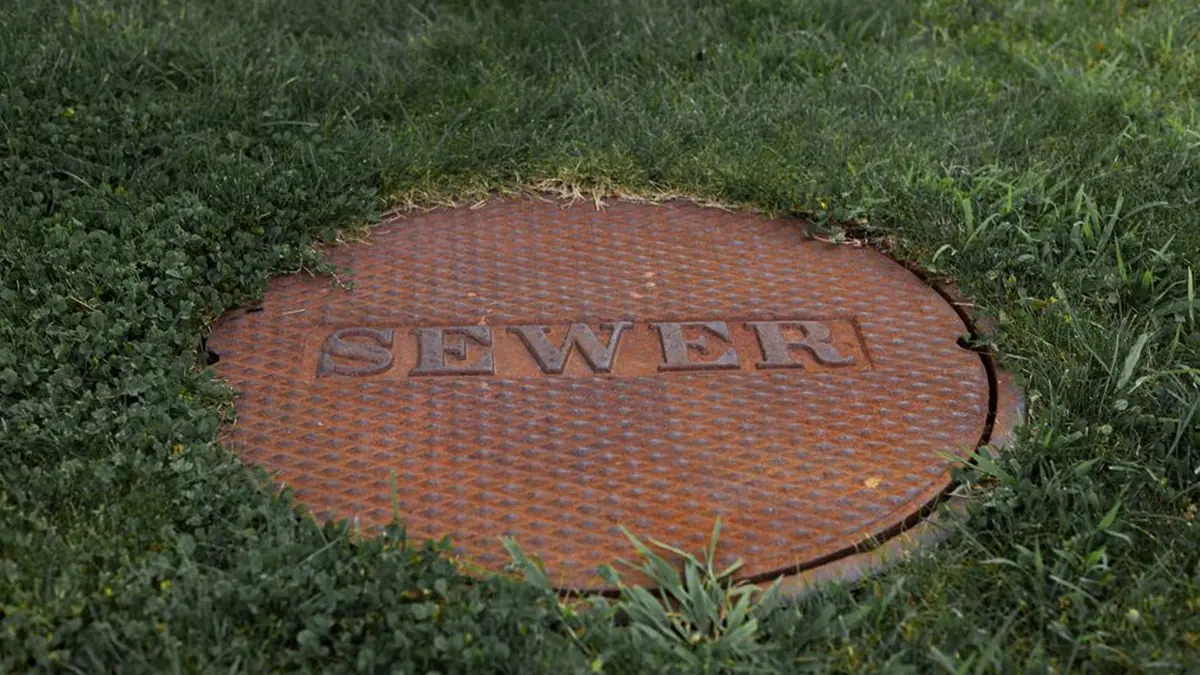
That single observation short-circuits most of the diagnosis. A toilet that will not flush while the gully outside is running is not a blocked toilet by any useful definition: the pan is fine and the line is full. Nothing you can buy will help, and the honest next step is to have someone clear a blocked drain in Vaucluse with a machine that reaches that far.
Why toilets around Vaucluse block the way they do
Two things about the housing here change the odds, and neither has anything to do with what anyone flushed.
The first is the age of the lines. A lot of the stock around here predates PVC, which means the toilet discharges into original earthenware laid in short sections with mortared joints. Those joints were never sealed the way a modern pipe is, and after fifty or sixty years they are the weak point, roots find the seam, and a section that has shifted holds water. The toilet, being the fixture that asks the most of the pipe, is where that shows up first.
The second is the boundary trap. On older Sydney properties there is a water-sealed trap near the front boundary, where your drain meets Sydney Water's main, along with an inspection opening and often a vent. It is a genuine choke point: it is the narrowest, deepest and oldest part of the run, it is where wipes and roots collect, and it is four to eight metres out from the house rather than under it. When a toilet on an older property blocks repeatedly, the boundary trap is one of the first places the camera goes.
That also settles the question people ask next. As a rule the pipes on your property up to the boundary are yours, and the main beyond it is Sydney Water's. The practical test is scale: if the neighbours are having trouble at the same time, report it to Sydney Water before you call anyone. If it is only your place, it is almost certainly on your side.
What actually happens when someone comes out
Worth knowing so you can tell whether what is being proposed makes sense.
A pan blockage is cleared at the toilet, usually with a closet auger, occasionally by lifting the pan off, which is a bigger job than it sounds, because the pan is sealed to the floor and the seal is replaced when it goes back. A line blockage is cleared from an inspection opening outside, with either an electric eel or a high-pressure water jetter. The eel cuts a hole through the obstruction; the jetter scours the full diameter of the pipe at around 4,000 PSI, which is why a jetted line stays clear considerably longer than an eeled one.
The part that matters is what comes after. On a first blockage with an obvious cause, clearing it is the whole job. On a second, a camera down the line is the difference between a fix and a subscription, and where it shows a cracked or root-damaged section, relining that length of pipe ends the cycle without digging up the garden.
When a blocked toilet is an emergency
Most of them can wait until morning, and we will say so on the phone rather than charge after-hours rates for something that is not moving anyway. Call it in straight away if any of these apply:
- Sewage is coming up inside, through a floor waste, a shower, or the toilet itself.
- The gully outside is overflowing and the house is still being used. Every flush and every shower is adding to it.
- It is the only toilet in the house.
- A washing machine or dishwasher is mid-cycle. Both pump their load out under pressure regardless of whether the line can take it.
- You can smell sewer gas indoors, which means a water seal somewhere has been pushed out.
The first one is the line worth drawing. Sewage outside on the ground is unpleasant and contained; sewage inside is a health issue and it is worth an after-hours callout rather than a night of hoping.
How to stop it happening again
Four things, and only the last one saves real money.
- A bin in the bathroom, and nothing but paper down the pan. Wipes, cotton buds, dental floss, sanitary products, hair. The rule is simpler than the exceptions: three things go down a toilet and one of them is paper.
- Check the cistern is filling to its line. Lift the lid and look for the marked water level. If it is filling short, every flush is underpowered, and an underpowered flush is the quiet cause of a lot of "why does this keep happening". It is usually the float needing a small adjustment.
- Skip the in-cistern blue blocks. They break down unevenly and the fragments jam under the flush valve, which gives you either a running cistern or a weak flush. A rim block does the same job to the bowl without sitting in the mechanism.
- After the second blockage, stop clearing and start looking. Two blockages in a year is the pipe telling you something. A camera inspection costs less than the third and fourth call-out put together, and it is the only item on this list that changes the outcome rather than the odds.
None of this is a maintenance lecture, because most blocked toilets are not caused by carelessness. They are caused by a pipe that has been in the ground since before the house had a second bathroom. The useful distinction is still the one at the top: find out whether it is the toilet or the drain, and you will know within five minutes whether this is yours to fix or ours.